
Understanding Indemnity and Reimbursement Policies
Indemnity and reimbursement policies are fundamental components in various sectors, especially in the realms of insurance and healthcare. While they both pertain to financial compensation, the manner in which they function is distinct. Grasping their fundamental principles and practical applications can be advantageous for both individuals and businesses. This expanded explanation aims to delve deeper into these concepts to provide a more comprehensive understanding.
Indemnity Policies
Indemnity policies are primarily designed with the intent to restore the insured party to their previous state prior to a loss. The main objective of these policies is to furnish coverage up to the amount that has been agreed upon in the policy. This ensures that the individual or entity affected by a loss does not unfairly benefit from that situation. Below are key aspects of indemnity policies elaborated for clarity:
1. Nature of Compensation: Indemnity entails compensating for the actual losses or damages that have been incurred. A critical point to consider is that this compensation will not surpass the amount necessary to bring the insured party back to their original state before the event occurred. For instance, if a property sustains damage due to a fire, the indemnity policy will cover the repairs but not exceed the original value of the property.
2. Usage: These policies are frequently utilized within the insurance sectors and are common in forms such as liability insurance, property insurance, and health insurance schemes. To illustrate, in a health insurance scenario, an indemnity policy might cover hospital expenses only up to a particular limit specified in the policy document, thereby ensuring coverage aligns with what is predetermined.
3. Policyholder’s Responsibility: Policyholders may be required to demonstrate the extent of their loss. This requirement ensures that there is a transparent process in place, thereby fostering fairness in claim settlements. Precise documentation and evidence of the incurred loss must typically be submitted to validate claims under these policies.
Reimbursement Policies
Reimbursement policies, on the other hand, operate by reimbursing expenses that an individual or entity has initially covered out of their own pocket. These types of policies are prevalent in the healthcare sector and within employee benefit programs. Here are some critical elements pertaining to reimbursement policies:
1. Payment Process: Initially, the insured party must pay for the services or costs themselves. Following this, they are eligible to claim a reimbursement from their insurer by presenting proof of the incurred expenses in combination with a completed claim form. This process inherently requires the policyholder to have initial funds available to cover these expenses until reimbursed.
2. Typical Applications: A prevalent example of this policy’s application is in health insurance. Policyholders often pay for their medical treatments upfront and subsequently request reimbursement from their insurer per the specifications of their policy. Similarly, in corporate environments, employers might reimburse employees for expenses tied to business operations, such as travel or meal costs incurred during work assignments.
3. Policy Limits: Although reimbursement policies offer flexibility, they come with predefined limits on the amounts that can be reimbursed. Some policies may also necessitate pre-approval for certain types of expenditures to qualify for reimbursement. It is imperative for policyholders to understand these limitations to manage their expectations properly.
Key Differences
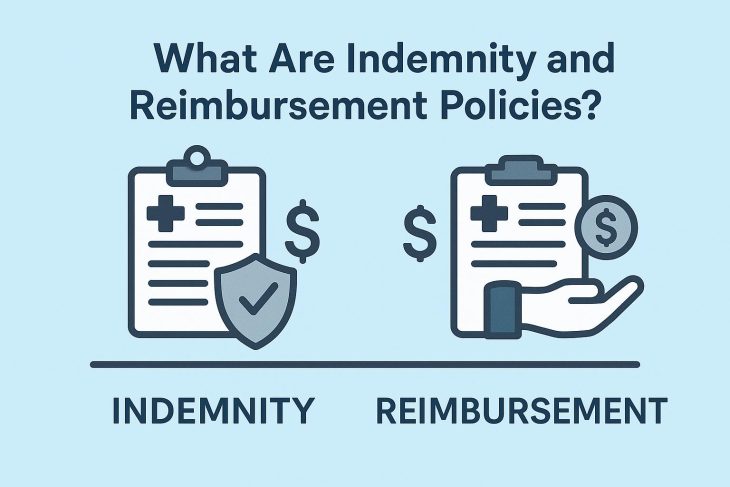
The noteworthy difference between indemnity and reimbursement policies is in the delivery of compensation. Indemnity policies focus on covering losses directly, potentially involving a third-party payment method. In contrast, reimbursement policies require the insured to initially pay the incurred expenses themselves and subsequently seek repayment. This distinction is crucial when deciding which policy aligns best with an individual’s or entity’s financial capability and risk management strategy.
Conclusion
Comprehending the distinction between indemnity and reimbursement policies is vital for individuals and organizations aiming to select the appropriate type of coverage for their specific needs. Each policy features distinct mechanisms and practical applications, forming an integral component of financial protection strategies. They significantly contribute to safeguarding individuals and businesses from unforeseen financial setbacks. For those seeking more tailored advice and recommendations, it is advisable to consult with a qualified insurance advisor or professional who can provide insights tailored to specific circumstances.
This article was last updated on: May 24, 2026