
The Significance of Hybrid Policies in Insurance
In recent years, the insurance industry has seen a growth in the development and adoption of hybrid policies. These innovative insurance products are gaining traction among policyholders looking to enhance the benefits they derive from their insurance premiums while minimizing the likelihood of those premiums being underutilized. By blending features from different types of insurance, hybrid policies provide increased flexibility and value to policyholders, leading to a more comprehensive coverage plan that can address a range of potential needs.
Understanding Unused Premiums
Premiums, which are the regular payments policyholders make to insurance companies to maintain their coverage, serve as the backbone of any insurance policy. Ideally, these payments should result in tangible benefits for the policyholder or their beneficiaries. However, in traditional insurance models, there are circumstances where premiums might not fully translate into benefits. For instance, a standard life insurance policy is designed to pay out a death benefit to the beneficiaries only if the insured dies within the coverage period. If the insured survives beyond this period, the premiums paid over the years do not return direct value to the beneficiaries, thereby remaining ‘unused’ from their perspective.
Similarly, policyholders of long-term care insurance may face situations where they do not end up needing the expensive care the policy was intended to cover, thus rendering the premiums paid towards such coverage underutilized.
Hybrid Policies Explained
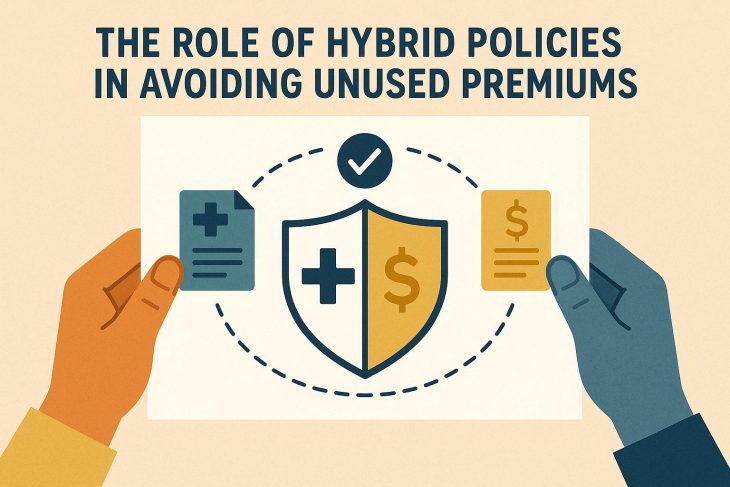
Hybrid policies were developed to tackle issues related to unused premiums by integrating multiple insurance features within a single product. This innovative approach allows policyholders to utilize different aspects of the policy depending on the circumstances they encounter. A prevalent example of hybrid policies is the combination of life insurance with long-term care benefits. This fusion offers the dual advantage of having life insurance coverage while simultaneously availing the policy’s benefits for long-term care if necessary during the policyholder’s lifetime.
The premise of a hybrid policy is straightforward yet effective: it offers multiple avenues for utilizing the benefits, ensuring that the premiums paid hold increased potential for use compared to traditional stand-alone policies.
Benefits of Hybrid Insurance Policies
Flexibility and Comprehensive Coverage: A significant advantage offered by hybrid policies is the flexibility and comprehensive coverage they provide. By consolidating benefits from various types of insurance, hybrid policies allow policyholders to meet multiple needs without the necessity of purchasing a host of separate policies. This all-in-one approach ensures that coverage can be as adaptable as the personal and financial situations in the policyholder’s life.
Value for Premiums: Another central benefit of hybrid policies is their ability to maximize the value derived from premiums. Given that these policies cover multiple scenarios, the risk of premiums being left unused diminishes significantly. For example, if a policyholder does not require long-term care during their lifetime, their beneficiaries still retain the right to receive a death benefit from the life insurance component of the policy.
Potential Cost Savings: By offering a range of coverages within a single policy, hybrid policies can often lead to financial savings. The cumulative cost of maintaining separate individual policies for distinct needs such as life insurance and long-term care usually surpasses the cost of a comprehensive hybrid policy that addresses both. Thus, policyholders can achieve similar or even expanded coverage at a reduced overall cost.
Potential Drawbacks and Considerations
Despite offering numerous benefits, hybrid policies are not without potential drawbacks that prospective policyholders should carefully consider. One such aspect is the complexity of hybrid policies. They tend to be more intricate than traditional policies as they integrate diverse coverages into a single entity. Hence, policyholders may need a deeper understanding of the specific terms, conditions, and limitations encompassed within the policy to fully appreciate its scope and to ensure it aligns with their expectations.
Moreover, because hybrid policies provide more extensive coverage, they may come with higher premium rates compared to typical single-purpose policies. The broader the coverage, the higher the cost can be, reflecting the inherent value these policies offer.
Therefore, it is essential for policyholders to meticulously evaluate these factors alongside their personal and financial circumstances before choosing a hybrid policy. It might be beneficial to consult with a financial advisor or an insurance professional who can provide tailored advice based on individual objectives and needs. For those interested in a deeper understanding of hybrid insurance policies, further information can be accessed through the Insurance Information Institute.
In summation, hybrid policies signify an important evolution in the realm of insurance, aiming to enhance the utility of premiums for policyholders. By presenting a blended suite of benefits across various insurance types, these policies offer a valuable solution for individuals seeking robust and comprehensive coverage while mitigating the risk of premiums going unused. As the insurance industry continues to evolve, hybrid policies will play an integral role in shaping the future of how insurance is both offered and utilized, ensuring that policyholders can better navigate their insurance needs amidst a dynamic landscape.
This article was last updated on: August 2, 2026