
Understanding Employer Group Long-Term Care Insurance
When considering options to ensure long-term care (LTC) for employees, a significant number of organizations explore the possibility of offering employer group long-term care insurance. This specific type of insurance is designed to provide coverage for services that assist individuals who suffer from chronic illnesses, disabilities, or other long-term conditions requiring prolonged care and support.
Advantages of Employer Group Long-Term Care Insurance
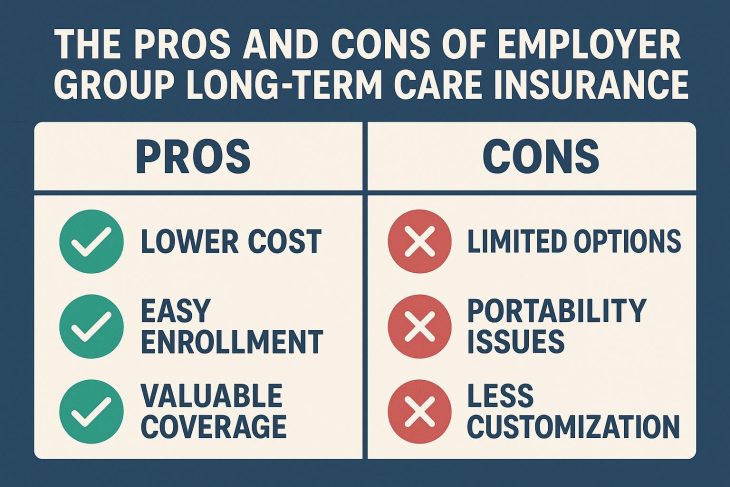
Cost-Effectiveness: One of the primary advantages of selecting group LTC insurance lies in potential cost savings. The group nature of the policy allows employers to negotiate more favorable rates, which typically results in more economical solutions for employees compared to procuring individual policies on their own. This cost-effectiveness not only benefits the employees but also helps employers manage their overall benefits expenditures more efficiently.
Simplified Enrollment: A noteworthy aspect of group LTC insurance is the streamlined enrollment process it offers. Unlike individual LTC insurance policies, which often require thorough medical underwriting, group policies may be provided without such prerequisites. This means that a broader demographic of employees, regardless of their current health status, can qualify for the coverage. The absence of medical underwriting reduces barriers to access and broadens the availability of long-term care insurance to a more diverse employee base.
Payroll Deduction: Another advantage is the facilitation of premium payments through payroll deduction. This method helps alleviate the financial strain on employees by simplifying how payments are made and ensuring consistent coverage without the need to worry about direct bill payments. By deducting premiums directly from payroll, employees benefit from an automatic, hassle-free system that ensures their coverage remains current.
Additional Employer Benefits: Implementing a long-term care insurance plan can enhance an employer’s benefits package significantly. This inclusion can serve as a valuable tool for attracting and retaining talented employees, as comprehensive benefits are increasingly sought after. For potential and current employees, the availability of LTC insurance can serve as a testament to an organization’s commitment to the long-term welfare of its workforce, thus fostering loyalty and reducing turnover.
Disadvantages of Employer Group Long-Term Care Insurance
Limited Control: Despite its benefits, employees may encounter limited control over the customization of their coverage. Employers often select the primary insurance provider and set the plan details, which can restrict employees’ ability to tailor the insurance to meet their specific needs. This lack of personalization may result in coverage that does not align perfectly with individual circumstances.
Benefit Variability: Group LTC insurance, while offering basic coverage, might not be as comprehensive as individual policies. Employees aiming for extensive benefits should meticulously review their plan details to understand coverage limits and exclusions. Failing to do so may result in unexpected out-of-pocket expenses that could have been avoided with a more thorough understanding of the plan’s specifics.
Portability Issues: One of the notable challenges with employer group LTC insurance is its portability. If an employee decides to change jobs, maintaining the insurance can become complicated. Some plans do offer the option to continue coverage, but this usually comes with a significantly higher premium, presenting potential financial burdens. It’s crucial for employees to consider the implications of job mobility on their long-term care insurance.
Lack of Tailored Features: Unlike individual LTC policies, group insurance often lacks the specially tailored features that individuals might desire. The one-size-fits-all approach can limit the personal benefits some employees may seek, and for those with specific needs, the standard offerings may fall short. This limitation highlights the importance of evaluating personal circumstances against the backdrop of the available group plan.
Considerations for Employers
For employers considering offering group long-term care insurance, it is important to balance the initial cost with the ongoing administrative responsibilities involved. An employer must assess the workforce’s needs and demographics to determine whether such a benefit will be appreciated and effectively utilized. This consideration entails understanding the health composition of the employee base and projecting how the inclusion of LTC insurance can influence the overall satisfaction and well-being of employees.
Furthermore, employers are encouraged to engage in detailed consultations with insurance advisors or industry experts. Acquiring professional insights can provide a comprehensive understanding of the various facets of implementing such a plan, ensuring that the decision aligns with the organization’s objectives and employee interests. Employers interested in further information may consider contacting experts to explore tailored solutions. Read more here.
Conclusion
In conclusion, employer group long-term care insurance can serve as a significant addition to an organization’s employee benefits package due to its cost-effectiveness and relatively simplified enrollment process. However, it’s imperative for both employers and employees to carefully weigh the advantages against potential disadvantages, particularly concerning issues of portability and customization. Ultimately, the determination of whether this type of insurance aligns with organizational goals and employee needs is crucial. By taking a comprehensive approach to understanding and implementing long-term care insurance, organizations can foster a supportive work environment that reflects a genuine commitment to employee welfare.
This article was last updated on: September 6, 2026