
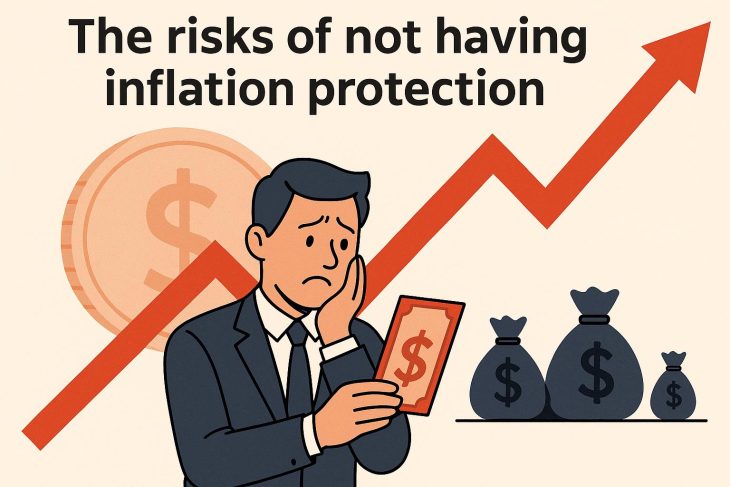
The Risks of Not Having Inflation Protection
Inflation is a common economic term that represents the gradual increase in prices and the simultaneous decrease in purchasing power. This phenomenon, when not properly managed or anticipated, can have profound effects on both personal and business financial health. Recognizing the manifold risks associated with a lack of inflation protection is crucial, as it informs strategic financial planning and investment decisions, thereby helping mitigate potential adverse effects.
Decreased Purchasing Power
Arguably the most immediate impact of inflation is the decrease in purchasing power. As prices for goods and services increase, the same amount of money affords fewer items than before, effectively diminishing the value of saved income. Over time, this dynamic can erode financial security, as the ability to maintain a desired standard of living becomes more demanding without appropriate inflationary safeguards.
To clarify, consider an individual whose monthly expenses increase due to inflation. If their income remains unchanged, the budgetary gap can lead to financial strain, compelling difficult choices, and perhaps increased debt reliance. Hence, inflation protection mechanisms, such as investment in assets that traditionally outpace inflation (e.g., stocks or real estate), become indispensable tools for maintaining purchasing power.
Investments and Returns
The impact of inflation extends beyond personal finance, significantly influencing investment returns. The real returns of an investment are adjusted for inflation, meaning that nominal gains can mask underlying losses if inflation is not accounted for. For instance, a nominal return of 2% on an investment juxtaposed against a 3% inflation rate yields a real return of -1%, illustrating a scenario where the investor’s purchasing capability diminishes despite apparent growth.
This underscores the importance of selecting investments that offer inflation-beating returns. Investment strategies may include diversifying portfolios with assets like real estate, inflation-indexed bonds, or stocks in sectors with pricing power during inflationary periods. Financial practitioners argue for a proactive approach in maintaining an inflation-adjusted outlook on portfolio management to safeguard wealth effectively.
Impact on Retirement Savings
When inflation affects retirement savings, the stakes are particularly high. As expenses rise, the real value of retirement funds can diminish substantially, resulting in the risk of retiring with inadequate funds. Retirees without inflation-adjusted income may exhaust their savings more quickly than planned, facing potential financial insecurity later in life.
Addressing this issue involves investment in annuities with inflation protection, or constructing a diversified retirement portfolio with assets that historically provide real returns above inflation. Moreover, regular reassessment of retirement plans in light of inflation projections can help retirees maintain financial stability throughout their retirement years.
Business and Operational Costs
On a macroeconomic scale, businesses must also navigate the challenges of inflation, particularly regarding operational expenses. Inflation can drive up costs for essential business operations, from raw materials to labor expenses. Companies without appropriate inflation hedges may experience squeezed profit margins, leading them to either absorb costs or pass them onto consumers through price increases.
However, raising prices is not always an option, as competitive market dynamics might not permit such adjustments without risking market share loss. Therefore, businesses need to develop strategies, such as cost optimization and investing in productivity-enhancing technologies, to help cushion the impact of rising operational costs. Engaging in long-term supply agreements or diversifying supplier bases are other strategies that could provide financial insulation against inflation.
Strategies for Inflation Protection
To counteract inflationary risks, implementing effective protection strategies is indispensably prudent for individuals and businesses alike. A common approach involves the inclusion of assets that are traditionally resilient to inflation in one’s investment portfolio. Such assets encompass real estate, commodities like gold and oil, and government-issued inflation-protected securities.
For businesses, strong inflation strategies may entail operational adjustments, such as enhancing pricing strategies, optimizing supply chains, and increasing operational efficiency. Additionally, exploring financial products that offer flexibility and protection against inflationary pressures can ensure that business models remain robust in a fluctuating economic environment.
Moreover, regular financial consultation with experts who are attuned to inflationary trends can be invaluable. Professionals offer insights into recalibrating financial asset allocations and business strategies to keep pace with or outmanoeuvre the effects of inflation. For those looking to deepen their understanding, accessing financial advisory services, online resources, or attending economic forums and workshops can provide comprehensive guidance on inflation management tactics.
In conclusion, the risks of not having inflation protection are far-reaching and impactful, affecting personal finances, retirement security, and business operations. Understanding these challenges and proactively adopting strategies for inflation mitigation helps maintain overall economic well-being by safeguarding financial futures in the face of potentially destabilizing inflationary forces.
This article was last updated on: July 19, 2026